
Cow-Calf

Is the Biden Administration’s plan for the beef industry workable, or does it ignore the economics of market structure and pricing across the meat industry supply chain?

With generally rising input costs, cow-calf producers need to put additional effort into cost management. Managing feed costs will be a key to minimizing cow costs and capitalizing on better market conditions in 2022.

Powles Ranch Partnership is the recipient of the 2021 AGA Commercial Producer of the Year award presented during the 2021 AGA National Convention and 50th Anniversary Celebration in Oklahoma City.

Cattle markets have improved significantly in the final weeks of 2021, with market analysts projecting those positive trends to continue in 2022.

Ranchers are encouraged to make record keeping a priority, including production records and complete financial analysis and planning.

“Will easy calves grow into cows that have more calving difficulty?” and “Will calves from easy cows have higher mortality?” Study results were presented at the BIF Symposium in Des Moines, Iowa, June 23.

Cattle producers may have a few options available to offset the rising costs of adding phosphorus to their herd’s diet, a Kansas State University beef systems specialist said.

The December Cattle on Feed report, released on Friday, was the sixth consecutive month of year-over-year decreases in feedlot inventories, though November and December totals were only down slightly.

Drought brings many nutritional and animal health-related challenges for ranchers. Cow performance issues during the grazing season may result from reduced forage quality and quantity.

The Arizona Cattle Industry Research & Education Foundation will sponsor a symposium for western ranchers in Mesa, AZ, February 18 and 19, 2022.

With 2022 nearly upon us, and bringing the prospect of a solid cattle market and profits to cow-calf producers not realized since 2015, now is a good time for ranchers to rethink their business in terms of time frame.

Through genetic potential, sensors from the environment, and actual practices, producers can predict when an animal is going to be finished or when the animal is going to be optimum in its marketing.

To improve efficiency of cow-calf operations, it is imperative to identify cattle and maintain accurate production records. Freeze branding is relatively stress-free and causes little or no damage to the hide.

What’s the Checkoff doing to address the threat plant-based alternative proteins pose to the beef industry? CBB vice-chairman Norman Voyles, Jr., provides a glimpse into the response from the Beef Checkoff.

Fox News founder and Wall Street Journal owner Rupert Murdoch has purchased the 340,000-acre Beaverhead Ranch in Southwest Montana from Koch Industries.

Consumers have access to greater differentiation and higher-quality beef products now, more than ever. As a result, beef spending has outpaced the competition since 2000. Cattle prices have risen as a result.

Changes in the beef supply chain in recent years have had an increasingly greater market impact. Pricing cattle off the cutout would provide a negotiating a formula that captures a relevant share of the total value.

Marie and Glen Nader’s Witcher Creek Ranch in Modoc County has been selected as the recipient of the 2021 California Leopold Conservation Award®.

The effect of winter weather in terms of frost damage to cattle and calves was less of a problem than expected, according to a survey of producers, veterinarians and feedlots conducted by Oklahoma State University.

The Texas & Southwestern Cattle Raisers Association submitted comments to the United States Department of Agriculture’s Food Safety Inspection Service to address questions about labeling of lab-grown protein products.

At the end of November, 69 percent of the U.S. was abnormally dry or worse with over 53 percent in some degree of drought. This could result in another severe round of cow liquidation in the first half of next year.

Many livestock operations harvested drought-affected crops, annual small-grains or other alternative forages this year. Those drought-stressed forages can be high in nitrates and cause toxicity issues in cattle.

Understanding and valuing genetic data can present a daunting task to seedstock and commercial producers. Panelists were asked to describe how they use genetic data to navigate breeding decisions and market cattle.
Mature Weight (MW) is moderate in heritability (35%) meaning response to selection pressure to downsize cows can be accomplished more effectively. Most beef cattle registries calculate MW EPDs.

Forage growing conditions vary around the country and 2021 brought a lot of variability due to weather so cattle producers should prepare to supplement their herds based on the forage quality they have available.

John and Dorothy Priske of Fall River have been selected as the recipients of the 2021 Wisconsin Leopold Conservation Award®.

Making efficient use of harvested hay continues to represent “low-hanging fruit” in both seedstock and commercial cattle operations.
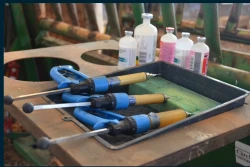
The highest quality vaccine that producers purchase may be of little value if not handled and stored properly. Don’t overlook key principles when preparing and administering vaccines and other animal health products.

Those seeking to take advantage of the emerging carbon market continue to evaluate a host of programs intended to document pasture management, crop rotations and feed additives all aimed at offsetting carbon emissions.

What does traceability mean for your operation? The U.S. CattleTrace Annual Symposium in Wichita, KS, Nov. 19. concluded with a panel to answer this specific question for attendees.