
Drovers

Agriculture is complex, and the AgLaunch farmer network helps early-stage startups get traction

The three most important things to retailers and consumers are having a good product, in stock and at a good value.

EPA Administrator Lee Zeldin proposes rescinding the 2009 Greenhouse Gas Endangerment Finding. If the proposal goes into effect, it could potentially lead to DEF systems no longer being required in tractors, trucks and other equipment using diesel-powered engines — a decision many farmers and others in the ag community would applaud.

The equipment manufacturer has responded to claims it restricts equipment owner and independent service technician access to software codes and diagnostic capabilities with the release of a new Operations Center PRO Service tool.


Check out the Sterling Marketing Profit Tracker for week of July 25.

When you grow up on a farm, certain phrases become ingrained in your vocabulary, like “feed the calves” or “fix the fence” or “mow the grass,” but one phrase, in particular, is notably absent.

The overall goal of a biosecurity plan is to safeguard herd health to support overall productivity and profit.

The amount of product yielded from a finished beef calf is often misunderstood.

Economists further breakdown USDA’s Cattle on Feed Report and Cattle Inventory Report that were released on Friday. The Cattle Inventory Report showed the smallest U.S. herd in history and a smaller calf crop, plus the Cattle on Feed Report confirmed continued tightening numbers on feed.

Jessica Sperber, UNL assistant professor and extension feedlot specialist, discusses the evolving role of university extension programs, how producers can use research and why mentorship is more than a buzzword.

The World Mycotoxin Survey represents 10,868 samples collected and analyzed from 81 countries around the world, resulting in 53,382 analyses.

Here are three options producers can consider when weaning calves.

A Colorado lawmaker has introduced a bill seeking permanent hours-of-service exemption for livestock haulers.

At Brey Family Beef, success is rooted in more than sales. It’s about building connections, supporting the community and proudly sharing the story behind every cut of meat.

Joe Kooima of Kooima Kooima Varilek says both live and feeder cattle futures gapped higher into all-time and contract highs again on Monday morning on the heels of the bullish USDA Cattle on Feed and Cattle Inventory Reports. Grains opened lower as weather is trumping export and trade news.


Scott Varilek with Kooima Kooima Varilek says both live and feeder cattle futures had a nice recovery and got within striking distance of the all-time highs set earlier in the week.

Derrell Peel, Oklahoma State University extension livestock marketing specialist, says USDA’s Cattle on Feed Report was friendly. The Cattle Inventory Report indicated confirms historically tight supplies will stay around for a while.

Removing all non-tariff barriers would open the doors for U.S. beef and pork demand in Indonesia.

Event helps dieticians connect the dots on animal care, sustainability and how beef truly makes its way to the plate

Trees like cedar, locust and elm are encroaching on the Great Plains, often called the “Green Glacier” due to its slow but persistent and widespread nature.
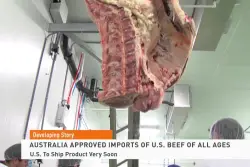
The Trump administration announces trade breakthroughs giving U.S. beef producers greater access to Australia, Japan and South Korea.

The department says it will relocate more than half of its Washington, D.C., staff to five hubs around the country, as well as consolidate or eliminate regional offices.

Missouri Extension State Forage Specialist Carson Roberts says hay is expensive to make and encourages producers to find other options for winter feed.

To be sustainable, each enterprise needs to be profitable on its own. Planning for profit starts by first setting a goal, then tracking income and expenses.

Four beef cattle specialists share strategies to help producers decide when to wean calves.

Check out announcements about product and service announcements, including a new strategy and advocacy firm, trace mineral paste, cost savings calculator and virtual fencing company expansion.
Check out Sterling Marketing Profit Tracker for week of July 19.

Market analysts attribute the strong beef demand to several factors including the consumer craze for protein.