
BEEF

Industry leaders expect continued momentum for Brazilian meat exports through year-end, supported by resilient demand and expanding access to strategic markets.

Because of the temporary nature of the H-2B visa, the Meat Institute says H-2B visas are often not used by meatpacking workers.

Katey Johnson’s combination of experiences as someone who grew up outside of the industry and who advocates online gives her first-hand knowledge to the true questions and concerns posed by today’s beef consumers.

Major shareholder opens up about opportunities in Europe and how the use of drugs like Mounjaro and Ozempic are boosting demand for protein.

What may seem unachievable in the U.S. surrounding delivery of chilled and frozen meat is happening now in other parts of the world.

There’s nothing like a livestock show to bring family and friends together. For these Illinois State Fair exhibitors, that’s a big reason why they devote so much time in the barn.

Market access obstacles continued to weigh heavily on exports of U.S. beef, while pork exports accounted for a larger share of production, USMEF says.

Tyson Foods announces Devin Cole will take over the role of chief operating officer. Meanwhile, Brady Stewart departs the company effective immediately.

Meat Institute CEO says this initiative can help counter confusing and misleading information about nutrition, including the role of meat and poultry in health dietary patterns.


Per capita availabiity of red meat and poultry is projected higher in 2025 and 2026.

The European Union will provide preferential market access for pork, has committed to streamlining requirements for U.S. pork sanitary certificates, and intends to address other non-tariff barriers affecting agricultural trade.

USMEF Chair Steve Hanson says there are buyers who want top of the line, others who want that mid cut and a lot of demand for cuts not used in the U.S.

Cattle producers Todd and Taylor Stegall share why and how they sell beef to their local school.

The three most important things to retailers and consumers are having a good product, in stock and at a good value.


Removing all non-tariff barriers would open the doors for U.S. beef and pork demand in Indonesia.
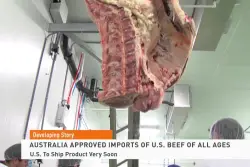
The Trump administration announces trade breakthroughs giving U.S. beef producers greater access to Australia, Japan and South Korea.

Market analysts attribute the strong beef demand to several factors including the consumer craze for protein.

The cattle industry unites to fight hunger and helps communities in the Northwest through beef donations.

With large moves in both directions, fed cattle prices have been erratic for the past three weeks.

“Guide to Meat Processing” provides the science behind the ingredients and methodology used for processing meat and poultry products.

Check out Sterling Marketing’s Profit Tracker for week of July 5.

With carcass weights continuing to rise, what impacts does that bring to the industry, packer and consumer?

USMEF shares May export data. While exports to China decreased steeply, Korea and Latin America and other countries increased compared to 2024.

The passing of the early summer seasonal high in fed cattle values came two weeks earlier than last year but was aligned with that of 2023.

Today’s market creates both the opportunity and the incentive is to pay down debt, and create a solid financial statement as opposed to herd building.

The Nebraska and Iowa/Minnesota reporting regions continue to lead the way with a trading range from $239 to $244/cwt.

One of the oldest U.S. Wagyu breeders, the Reeves family from Washington has been raising Wagyu since the 1990s.

After a record performance in 2024, U.S. beef exports to Central America are reaching new heights again this year.