

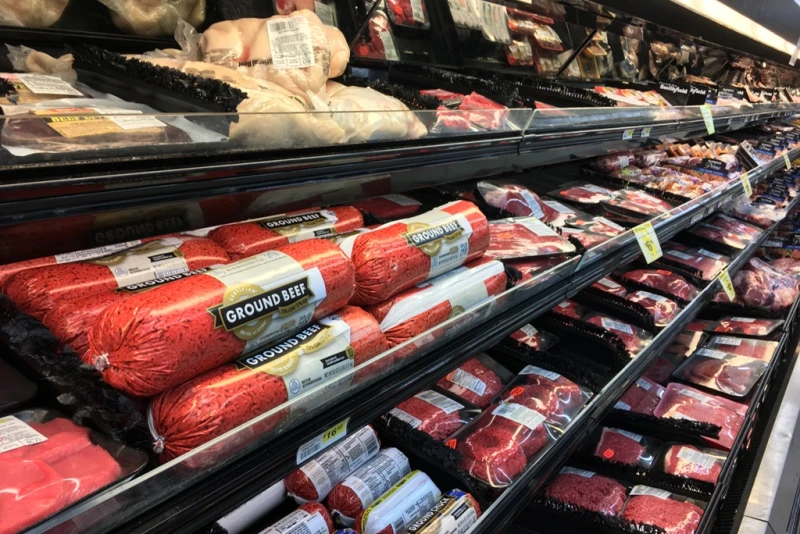
Since the beginning of the cattle bull market in 2022, retail and wholesale beef prices have climbed steadily. However, not all beef products are rising at the same rate. Surprisingly, budget-friendly ground beef prices are climbing significantly faster than luxury cuts like tenderloin.
According to Derrell Peel, Oklahoma State University Extension livestock marketing specialist, a combination of shifting consumer habits and a dramatic drop in cow slaughter is driving this trend.
“In general, as beef prices increase, consumers are likely to rely even more heavily on ground beef to blunt the impact of higher beef prices,” Peel explains. “This increases ground beef demand relative to other beef products.”
How Much Have Beef Prices Increased?
According to Peel in a recent Cow-Calf Corner article, here is how much wholesale beef prices have risen from 2022 averages to August 2026:
- Choice Wholesale Boxed Beef: Up 44.1%
- All-Fresh Retail Beef: Up 29.8%
- Wholesale Beef Tenderloin: Up 26.6%
- 85% Lean Ground Beef: Up 60.7%
- High-Value Steaks (Ribeye, Strip Loin, Tenderloin): Up an average of 33.6%
- Mid-Tier Cuts (Flank, Tri-Tip, Top Sirloin, Top Round): Up an average of 42.7%

Why Is Ground Beef Getting So Expensive?
Figure 1 shows monthly wholesale values for beef tenderloin and a representative ground beef formulation of a 7:1 mixture of 90% and 50% lean trimmings resulting in an 85% lean product. The trend lines for each price series confirm that ground beef prices have been rising faster than tenderloin and almost all other muscle cuts.
Ground beef prices are rising due to classic supply-and-demand factors. On the demand side, as inflation pushes high-end steak prices up, consumers trade down to ground beef to save money. On the supply side, the raw materials needed to make ground beef have shrunk dramatically.
Ground beef relies heavily on lean processing beef derived from nonfed cattle — cull cows and bulls.
“Not only is the demand for ground beef higher, the supply of ground beef has decreased faster than for fed beef,” Peel notes. “The production of nonfed beef is down more sharply than fed beef because cow slaughter has decreased 30.5% since 2022, while fed slaughter is down 12.7%.”

Figure 2 shows that the supply of nonfed beef — cull cows and bulls — has decreased faster than the production of fed (steer and heifer) beef.
While heavier carcass weights for steers and heifers have partially offset the drop in fed slaughter, cow carcass weights have only increased modestly, leaving a major deficit in lean grinding materials.
What Is the Beef Price Outlook for 2027?
Peel anticipates that while the ground beef market may begin to find its footing, overall beef supplies will remain incredibly tight.
“Going forward, nonfed beef production may decrease more slowly as the beef cow herd and cow slaughter stabilize,” Peel says. “However, fed beef production is expected to continue decreasing with tighter fed cattle supplies expected through 2027 at least.”
This means consumers should expect elevated beef prices to persist for the foreseeable future.
Your Next Reads:




