
Beef Biosecurity

Colorado Parks and Wildlife officers confiscated feral swine from a farm in El Paso County that later tested positive for pseudorabies.

Canadian officials reported the first case of BSE in six years. South Korea has suspended all beef imports from Canada as a precaution until it can gather more information about the case.

Attendees at the annual CattleTrace symposium saw a glimpse of how technology can improve animal health, management and welfare while offering ways to increase revenue.

Federal agents foiled plans for 47 roosters and hens that tried to cross the U.S. border at the Laredo Port of Entry on Nov. 12.

Skilled researchers are needed to conduct studies in the highly secure containment system at NBAF to ensure both safety and competence in the work being performed.

A five-year, $8.5 million project will impact 100,000 acres of row crops and feed production in a key beef producing region to build on farmers’ ongoing efforts to mitigate and adapt to impacts of climate change.

A single case of classical bovine spongiform encephalopathy (BSE) was confirmed by British animal health officials on Friday.
U.S. CattleTrace, the leader in animal disease traceability, is unveiling the U.S. CattleTrace Tag Store, located on their website.
North Dakota is one of those areas that has been dealing with drought for months, and now another concern, after anthrax was found in a cattle herd in Kidder County last week.

The number of dogs being imported into the U.S. for resale from countries affected by ASF is growing. Combine that with an increasing risk of foreign animal disease spread, and it’s a formula for potential disaster.

Cargill is the second beef processor to invest in the effort formed by multiple state cattlemen’s organizations to develop a national infrastructure for animal disease traceability in the U.S. cattle industry.

It wasn’t the kind of cake U.S. Customs and Border Protection agriculture specialists were expecting to find while examining leftover baggage at Washington Dulles International Airport last month.

The Pirbright Institute is tackling three deadly livestock viruses: porcine reproductive and respiratory syndrome virus and African swine fever virus in pigs and bovine respiratory syncytial virus in cattle.

Beef industry efforts to develop a voluntary animal traceability system gained significant traction today as Tyson Fresh Meats becomes the first beef processor to invest in membership to U.S. CattleTrace.
Each year, several thousand dogs enter the U.S. for resale or adoption. In a recent Hogs on the Hill article, NPPC chief veterinarian Liz Wagstrom wrote that it’s time to sound the alarm on importing rescue dogs.

Nearly 900 cows are set to be euthanized by Spanish authorities fearing bluetongue after the cattle drifted for more than two months on the Mediterranean Sea while the owners searched for a buyer.

FADs are a constant threat to the livestock industry. The country is more tuned in to this struggle than ever before with the recent COVID-19 pandemic. National Pork Board’s Dave Pyburn and NCBA’s Ethan Lane discuss why.

Data from a recent Pulse Poll shows that ranchers are split nearly down the middle about traceability initiatives.

If the COVID-19 pandemic has taught the country anything, it’s that there is a tremendous amount of synergy between the circumstances of a pandemic involving humans and those involving animals.

Wild pig populations in Canada continue to expand rapidly and are completely out of control in Saskatchewan, Manitoba and Alberta. A new tool may help control this invasive species. Here’s why you should take note.

Invasive species councils in Montana and Washington are serious about preventing Canadian feral pigs from crossing into the western United States.

NCBA’s Beef Quality Assurance program releases a new Beef Checkoff-funded tool to help cattle farmers and ranchers ensure they are prepared with a custom biosecurity plan.

From increasing practical livestock biosecurity measures to advancing rapid depopulation and disposal abilities during animal disease outbreaks, Farm Bill funding will support endeavors to protect animal health.

At Walmart’s Sustainability Milestone Summit, World Wildlife Fund, the Walmart Foundation, McDonald’s and Cargill announced they will join forces to make improvements to the grasslands of the Northern Great Plains.
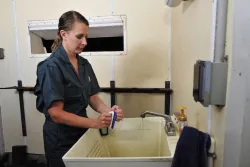
Putting biosecurity protocols in place can help reduce the risk of disease being transferred to not only livestock, but to humans as well.

The ACE Act will protect livestock from predation, compensate livestock producers who experience depredation by federally protected species, and fund methods to reduce conflicts between humans and predators.

A Texas Tech researcher has received funding from both USDA and NCBA for a project to evaluate the distribution of antimicrobial resistance (AMR) genes and the occurrence of horizontal gene transfer in high-risk cattle.

Expediting quick and accurate diagnoses while aiding in choosing the correct antibiotic the first time can save calves’ lives and reduce unnecessary antibiotic usage.

The goal of herd immunity is the reduction of infection or disease in a population’s susceptible segment.