

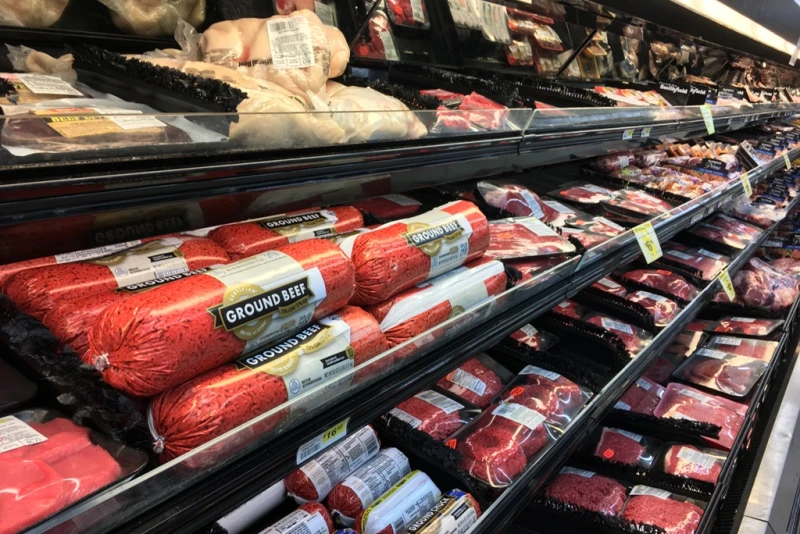
President Donald Trump announced a shift in U.S. trade policy on Friday, Aug. 21, 2026, revealing a temporary waiver on out-of-quota tariffs for imported ground beef. Writing on Truth Social, President Trump stated that the initiative aims to slash ground beef costs by 25% while the domestic beef industry recovers from historic herd declines.

The White House has not released details on which nations will supply the beef or how the 25% price discount will be enforced at the retail level.
Quick Facts: Trump’s Beef Tariff Executive Action
| Metric / Term | Details |
|---|---|
| Import Quota Limit | Up to 300,000 metric tons of ground beef product |
| Duration of Waiver | 90 days (starting Aug. 21, 2026) |
| Target Retail Discount | 25% below current market prices |
| Key Technical Change | No out-of-quota tariffs applied to these imports |
Why Did President Trump Waive Ground Beef Tariffs?
The administration’s decision is designed to directly address the rising cost of ground beef, which has placed a financial burden on working American families. According to President Trump’s statement on Truth Social:
“Today, I concluded a deal to substantially lower the price of ground beef for working American families. As everyone knows, under President Biden, beef prices soared at their fastest rate and the American beef herd fell to its smallest size in modern history. As we work to rebuild this herd and help our ranchers, for the next 90 days, the United States will allow up to 300,000 metric tons of product for ground beef to be imported with no out-of-quota tariff. We have a commitment that this beef will be sold at 25% below current market prices. This deal will reduce prices for Americans while giving space for our Great American Beef Herd to grow again.”
Under the existing tariff-rate quota (TRQ) system managed by the World Trade Organization, importers must pay steep, protective duties once foreign beef volumes exceed strict limits. By removing these out-of-quota tariffs for 90 days, the administration is clearing the way for a massive short-term supply of cheaper, lean manufacturing beef.
This is actually the second major move by the Trump administration to bring down beef prices. In October, he first suggested purchasing Argentina beef could bring beef prices down and then in February he signed an executive order quadrupling beef imports from Argentina.

How Does This Affect American Cattle Producers?
While the policy looks to be a win for cost-conscious shoppers, the U.S. ranching industry warns of severe long-term consequences.
Domestic beef production is currently suffering from a highly restricted supply. Multi-year droughts and high-input costs have forced ranchers to liquidate their herds, reducing the U.S. cattle inventory to its lowest level in 75 years. This tight supply plus strong consumer demand for beef have pushed prices up, allowing cattle ranchers to finally see strong profits after years of struggle.
Live and feeder cattle futures gapped lower on the open Friday in response to President Trump’s post. Scott Varilek with Kooima Kooima Varilek says the news is is enraging cattle producers he works with.
“So the announcement is 300,000 million metric tons of ground beef that he wants to bring in quota-free, tariff-free, so he can lower the prices of beef, you know, and help us ranchers. That part in there is the part that really frustrates everybody,” he says.
Varilek says those additional imports equate to 44 days worth of U.S. ground beef consumption.
The National Cattlemen’s Beef Association (NCBA) expresses disappointment following the announcement. NCBA Chief Executive Officer Colin Woodall cautions that artificial market interventions threaten the stability of the entire supply chain.
“While America’s cattle producers share the goal of keeping groceries affordable for consumers, flooding the market with government-subsidized, below-market beef is not the way to rebuild the American cattle herd,” Woodall says. “Today’s announcement and other market interventions throw cold water on the prospect of herd expansion and sacrifice long-term stability for short-term messaging.”
United States Cattlemen’s Association (USCA) agrees saying the move “sidelines U.S. producers, threatens cattle prices and risks undermining consumer confidence in the beef supply.”
“You don’t put America first by putting U.S. cattle producers last,” says USCA President Justin Tupper. “This move will weaken our markets and gamble with food safety in the process.”
Market Outlook: A Challenging Season for Ranchers
The announcement comes at a highly sensitive time for the agricultural sector. Ranchers typically make critical herd management and culling decisions in late summer and early fall.
Even before Friday’s executive action, the market was showing signs of vulnerability — feeder cattle futures had already shed more than $20/cwt. since Aug. 5. Market analysts worry that digesting an influx of cheap imported beef will depress domestic prices further, discouraging ranchers from investing in rebuilding their herds.
Iowa Cattlemen’s Association President Craig Moss adds, “President Trump’s announcement today about importing foreign beef is extremely disappointing to the Iowa Cattlemen’s Association and its members. The President’s comments and decisions have created unnecessary market volatility today. The drop in the markets will directly impact their profitability and bottom line, and in turn impacts decisions our producers are making about expanding their cattle herds. We believe the government should avoid intervention and let the market work.
“Just a week ago, many cattle feeders in the state lost one of their marketing options with the closing of Tyson’s Joslin plant; today they are taking another hit with this announcement,” he summarizes. “What we know is that consumer demand for the high-quality beef raised by U.S. producers has remained strong. Consumers have been willing to pay for beef. Simply put, it is supply and demand economics.”
Your Next Reads:




