
U.S. Department of Agriculture

USDA reports an all-time August low for feedlot entries; analysts say the long-term price high is not yet in.

Funding removes financial barriers for states establishing Meat and Poultry Inspection programs, paving the way for more processors to enter interstate commerce under the CIS framework.

As public research funding declines, one of the beef industry’s leading voices calls for producers to help secure the future of genetic improvement.

Directives target gray wolves, local processing and mandatory labeling in an effort to appease ranchers following tariff-free beef import backlash.

While shoppers balk at $6 ground beef, they routinely spend double or triple that per pound on lattes, potato chips and dog food. Here is why domestic beef remains a financial bargain — and why artificial price-crushing policies could trigger a permanent supply crisis.

Under a FSA policy shift, beef operations recovering from natural disasters can now use cost-share funds to swap traditional wire for GPS collars.


USDA says its new package will help rebuild the cow herd, expand processing and support ranchers with risk management tools and disaster recovery flexibility.
Placements down 11% signal tighter front-end supplies, but Northern feedyards face renewed basis pressure as packer capacity shrinks and trade policy headlines add fresh uncertainty.

Sen. Mike Rounds and Amy Klobuchar introduce voluntary grassland program to support up to 4 million beef cows, lower beef costs and boost rural conservation.

USDA’s Richard Fordyce outlines how cattle producers can document death losses, navigate new AGI rules, and tap local market values under the Livestock Indemnity Program.

Proponents demand the “right to choose American,” while opponents warn of a repeat trade war, soaring grocery bills and a mismatch with actual consumer behavior.

A New York farmer’s viral videos exposing pressure tactics by solar developers caught the attention of USDA’s new Special Envoy for American Landowners, John Rich, turning a local fight into a national one.

Funded through the Working Families Tax Cuts Act, the Feral Swine Eradication and Control Pilot Program is opening $35 million in new grants to help partners across 14 states protect American farms, livestock and natural resources.

New MOU between USDA and the Small Business Administration creates a formal channel for producers to report regulatory disputes with federal agencies — building on the Lawfare Portal producers can already use today.

Aimed at stabilizing regional markets amid 75-year herd lows, the new program offers a financial lifeline to non-dominant, U.S.-owned packers.

The USDA strike team uses dispersal by air and vehicle along with ground release chambers to keep the devastating flesh‑eating pest from gaining a foothold in U.S. livestock and wildlife.

Despite May placements dropping nearly 10%, the June 1 on-feed inventory is the second largest on record. CattleFax’s Patrick Linnell says heavier carcass weights and slower turnover are keeping pens full now, but could chip away at leverage by fall.

With a focus on reducing regulatory burdens and improving customer service, the USDA’s new action plan and $60 million in MPPEP funding aim to fortify the domestic beef supply chain and support rural economies.

Animal health officials respond to second detection of New World screwworm in a 1-month-old calf.

The new 52,000-square-foot facility in Kerrville, Texas, is dedicated to genomics and advanced pest control technologies to protect American livestock from invasive threats.

As the federal government settles with Agri Stats over data-sharing, Acting Attorney General Todd Blanche and Secretary Brooke Rollins launch a high-stakes investigation into beef market concentration and potential price-fixing.

Despite daily volatility, cattle markets are still driven by strong demand and tight supplies. Rising fuel costs could pressure consumers, but slow herd expansion keeps the long-term outlook bullish through the decade.

Ag Secretary Brooke Rollins says a multi-agency Trump administration effort will target fertilizer costs and boost U.S. production, with a major announcement expected yet this week.

Following a major stakeholder meeting, USDA is boosting survey sample sizes and moving data-focused offices out of D.C. to rebuild farmer trust and improve the accuracy of its agricultural reports.
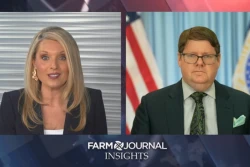
In a candid conversation with Farm Journal, USDA Deputy Secretary Stephen Vaden says USDA’s message to fertilizer companies is simple: “Be part of the solution, don’t be part of the problem.”

Agriculture Secretary Brooke Rollins broke ground on a $750 million sterile fly facility in Texas and confirmed the border will remain closed until the New World screwworm threat is pushed back from the U.S. border.