
Tariffs
Tariffs, also known as taxes on imported goods, are a tool used by President Donald Trump as part of his overall economic vision. As U.S. agriculture navigates tariffs and their implications on trade, commodity prices, input costs and more, ag economists and farmers remain divided on the effectiveness of tariffs and what the changes mean for the broader economy and livelihoods.

Directives target gray wolves, local processing and mandatory labeling in an effort to appease ranchers following tariff-free beef import backlash.


Ground beef demand remains strong as cattle producers push back on Trump’s latest beef import plan that sent cattle prices sinking. Ranchers say consumers don’t have a beef price problem — they have a fuel price problem.

Seeking to ease historic grocery inflation, the administration opens the doors to foreign beef, but the U.S. cattle industry says the move will hurt domestic herds. The announcement on Friday sent the futures markets lower.

Former US Trade Representative Bob Lighthizer says Mexico, not Canada, will be the biggest test in USMCA talks, citing trade deficits. That’s as agriculture leaders push to protect billions in North American trade.

At the Iowa Economic Summit, former USTR Bob Lighthizer warned farmers that China’s soy and meat buying is a short-term play, urging producers to “take off the rose-colored glasses” regarding long-term export risk.

The move will start a six-year review period as the U.S. pushes for stricter automotive content rules in negotiations with Mexico.

Export approval for U.S. plants is a “necessary first step,” but economist John Nalivka cautions that certification doesn’t guarantee big tonnage. The real test comes when China starts placing orders.

As producers navigate financial strain and D.C. disconnect, realities such as steep input costs, trade frustrations and E15 limbo are becoming decisive factors shaping the rural vote.

Trump administration pauses announcement of new strategies to address record beef prices and support rebuilding the domestic cattle herd.
In a candid conversation with Farm Journal, USDA Deputy Secretary Stephen Vaden says USDA’s message to fertilizer companies is simple: “Be part of the solution, don’t be part of the problem.”

As the Iran war drives fertilizer prices up 40%, the Trump administration is warning against price gouging. A new survey shows only 60% of corn farmers have secured their nitrogen needs for 2026.

A new reciprocal trade agreement with Ecuador is set to transform a minimal market into a promising opportunity for U.S. beef and pork producers.

Brad Kooima with Kooima Kooima Varilek says the USDA Cattle on Feed report was providing some support. The on feed number came in at 98% of a year ago, placements were at 95% which was below trade estimates and marketings were at 87%.

In a major decision, the Supreme Court rules President Trump exceeded his authority by imposing tariffs using national emergency laws.

In 2026, imports decide how painful the grind gets, exports decide whether the carcass pencils, and policy decides how fast everything can change.

The proclamation authorizes an 80,000 metric ton increase in in-quota lean beef trimmings imports in 2026. Economists say retail beef prices are unlikely to drop without impacting producers.

The court issued more rulings Wednesday but did not act in the tariffs case, which was argued on Nov. 5.

The change reverses part of a July trade action that had imposed elevated import duties on multiple categories of Brazilian goods and is the latest effort by the Trump administration to bring grocery prices down.

Ag products not grown or produced enough in the U.S.—including coffee, fruit and some fertilizers—are being removed from Trump’s reciprocal tariff list. The move also lifts tariffs on one major ag import: beef.

The White House says China will buy 12 MMT of U.S. soybeans in late 2025 and 25 MMT annually through 2028, plus resume U.S. sorghum and hardwood log imports, clearing confusion over comments from Secretary Bessent.

On Wednesday, Secretary Rollins announced a plan for American ranchers and consumers as Trump posted comments on social media regarding tariff impact on beef prices.

Brad Kooima of Kooima Kooima Varilek says live and feeder cattle futures are back into new contract and all-time highs after showing considerable resilience last week and despite a selloff in the equities. Grains sell off on tariff concerns.

USMEF’s Dan Halstrom says it wasn’t that long ago that the U.S. was at a severe disadvantage with Japan tariff wise.

Scott Varilek with Kooima Kooima Varilek says live and feeder cattle futures are trying to recover after an ugly day Thursday that ended with bearish reversals. Grains are mixed on favorable weather and tariff news.

Removing all non-tariff barriers would open the doors for U.S. beef and pork demand in Indonesia.
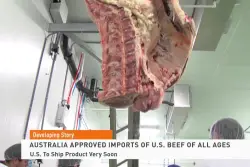
The Trump administration announces trade breakthroughs giving U.S. beef producers greater access to Australia, Japan and South Korea.