
Biosecurity

Colorado Parks and Wildlife officers confiscated feral swine from a farm in El Paso County that later tested positive for pseudorabies.

His warnings have gone largely unheeded, while wild pigs rapidly expand across Western Canada, with no nationally coordinated science-based containment strategy in place. For Brook, it’s a recipe for disaster.

USDA’s Animal and Plant Health Inspection Service is awarding more than $16.3 million to 64 projects with states, universities and other partners to strengthen programs to protect animal health.

Federal agents foiled plans for 47 roosters and hens that tried to cross the U.S. border at the Laredo Port of Entry on Nov. 12.

While there are lots of reasons to believe ASF in the Dominican Republic is not a sure sign it will penetrate the U.S. industry, still, everyone has become focused on it and how slippery it is to contain.

Efforts to control the feral pig population in Oklahoma are ahead of last year, USDA reports.

The number of dogs being imported into the U.S. for resale from countries affected by ASF is growing. Combine that with an increasing risk of foreign animal disease spread, and it’s a formula for potential disaster.

Being the victim of a crime can be a traumatic experience. Whether it’s a break-in at your farm or an animal activist trespassing on your property, John Sancenito says how you respond can make all the difference.

As a former police detective and terrorism expert, John Sancenito understands that it’s hard for people, especially farmers who have the tendency to be self-reliant, to involve the police when a break-in occurs.

It wasn’t the kind of cake U.S. Customs and Border Protection agriculture specialists were expecting to find while examining leftover baggage at Washington Dulles International Airport last month.

The Pirbright Institute is tackling three deadly livestock viruses: porcine reproductive and respiratory syndrome virus and African swine fever virus in pigs and bovine respiratory syncytial virus in cattle.
Each year, several thousand dogs enter the U.S. for resale or adoption. In a recent Hogs on the Hill article, NPPC chief veterinarian Liz Wagstrom wrote that it’s time to sound the alarm on importing rescue dogs.

FADs are a constant threat to the livestock industry. The country is more tuned in to this struggle than ever before with the recent COVID-19 pandemic. National Pork Board’s Dave Pyburn and NCBA’s Ethan Lane discuss why.

If the COVID-19 pandemic has taught the country anything, it’s that there is a tremendous amount of synergy between the circumstances of a pandemic involving humans and those involving animals.
Wild pig populations in Canada continue to expand rapidly and are completely out of control in Saskatchewan, Manitoba and Alberta. A new tool may help control this invasive species. Here’s why you should take note.

A new $11.65-million investment by the USDA will fund 14 projects to help farmers and private landowners trap and control feral swine.
Invasive species councils in Montana and Washington are serious about preventing Canadian feral pigs from crossing into the western United States.

Behind the walls of a hulking industrial compound in rural China, top pig producer Muyuan Foods is trying to raise more hogs on a single site than any company in the world - a risky investment with deadly ASF lingering.

From increasing practical livestock biosecurity measures to advancing rapid depopulation and disposal abilities during animal disease outbreaks, Farm Bill funding will support endeavors to protect animal health.
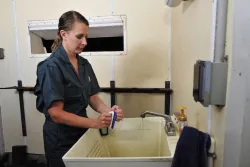
Putting biosecurity protocols in place can help reduce the risk of disease being transferred to not only livestock, but to humans as well.