
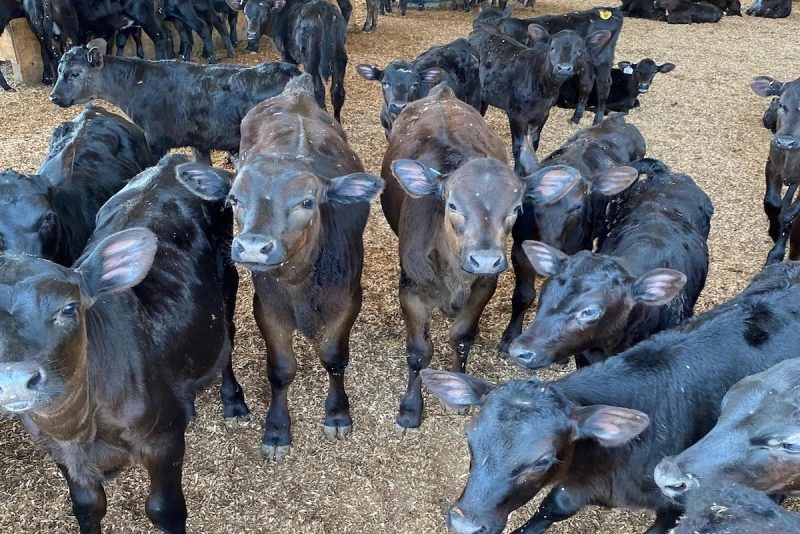
What started out as somewhat of an experiment less than a decade ago has now become a standard of the U.S. cattle industry. All signs would indicate that the beef-dairy crossbred animal is here to stay.
Recognizing the unique characteristics and production channels of these calves, researchers at Iowa State University conducted a survey of producers involved in their rearing. Funded by the Iowa Beef Industry Council and Iowa Beef Checkoff, the study was conducted to:
(1) Learn about management practices employed by dairy producers and calf ranches who raise beef-cross calves; and
(2) Learn about challenges related to finishing beef-cross calves from the perspective of commercial feedlot operators.
On the calf-rearing side, responses were submitted by 11 producers who raise more than 21,000 dairy or beef-cross calves annually. Five were current dairy producers, while the rest were speciliazed calf raisers.
All but one of the 11 calf raisers had ongoing knowledge of colostrum feeding and/or tested incoming calves routinely for passive transfer of immunity. The single producer who did not have confirmed colostrum status purchased calves from auctions.
The calf raisers indicated a need for additional research on reducing liver abscesses; sire genetics and selection; starting calves to prevent sickness; weather impact on starting calves; nutrition plans; improving carcass cutout; impact of stress events; and prevention on treatment of mycoplasma.
On the feedlot side, 21 cattle feeders replied, most of whom had experience raising full-blood beef, dairy, and beef-cross calves.
Of particular interest was the disparity between the size of the animals when they entered the feedlot stage. The producers reported the average weight of beef calves entering the feeding stage was 613 pounds, compared to an average in-weight for beef-cross calves of 372 pounds.
The feeders’ experience also pointed to the superior carcass performance of beef-cross calves. They reported an average of 13% of beef-cross animals grading Prime, compared to an industry average of 7.54% reported in the most recent National Beef Quality Audit. They also reported an average of 22% of beef-cross calves produced Yield Grade 1, versus a 6.77% national average.
The ISU researchers noted a wide variation in implant strategies for beef-cross calves, which they suggested could use some fine-tuning. “In theory, there should be a different implant protocol for BXD compared to beef cattle due to differences in days on feed, marbling genetic merit, and traditional muscle size and shape,” they stated.
Feeders also expressed a desire for improved education regarding beef semen selection, particularly focused on choosing sires that promote feedlot performance and high-quality carcass finish. “Additional research is needed to select the ideal beef bulls based on growth, performance, and carcass merit without compromising calving ease,” the ISU researchers noted.
The study’s complete report can be accessed here.




