
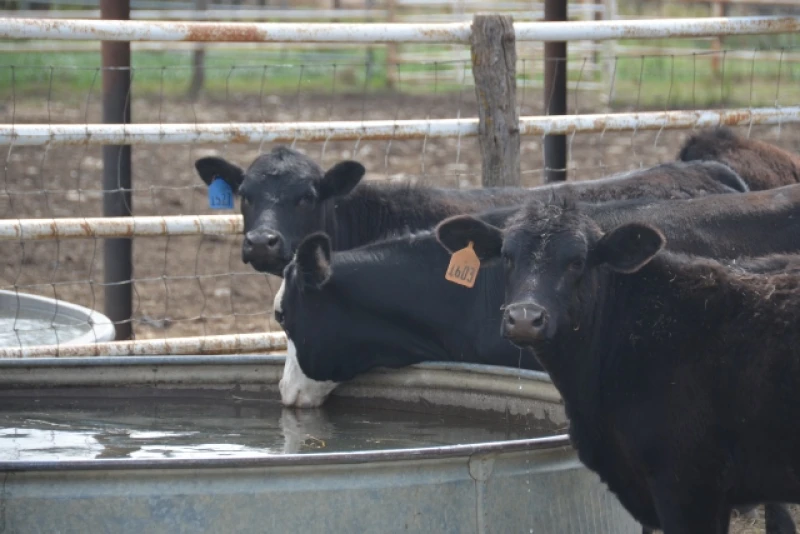
A devastating case of nitrate poisoning that killed 89 cattle in Kansas has prompted researchers to evaluate whether inexpensive water test strips could help identify dangerous nitrate contamination before cattle are exposed.
The case involved a herd of 150 cattle that experienced heavy losses after drinking water hauled in a tank that had previously been used for fertilizer. After nine days grazing milo stalks during a period of severe cold weather, 89 animals died.
Samples submitted to the Kansas Veterinary Diagnostic Laboratory revealed extremely elevated nitrate concentrations in the water source, measuring more than 9,400 parts per million (ppm). Ocular fluid samples collected from affected cattle also contained nitrate levels consistent with nitrate toxicosis.
The incident led Dr. Scott Fritz, veterinarian at Kansas State University, and the Kansas Veterinary Diagnostic Laboratory to ask a practical question: Could commercially available nitrate test strips provide a quick, affordable way to screen water sources before a disaster occurs?
How Does Nitrate Poisoning Kill Cattle?
Nitrate poisoning continues to be one of the most common causes of acute toxicosis in cattle. While nitrates occur naturally in plants and water, excessive concentrations can become deadly.
In the rumen, nitrate is converted to nitrite, which is significantly more toxic. Nitrite enters the bloodstream and converts hemoglobin into methemoglobin, reducing the blood’s ability to carry oxygen. As oxygen delivery to tissues declines, cattle may develop rapid breathing, weakness, muscle tremors, ataxia and characteristic brown or bluish mucous membranes. Severe cases can result in sudden death.
Although forages are often the focus of nitrate concerns, water can also become contaminated through fertilizer runoff, animal waste, decaying organic matter or direct fertilizer exposure. Cattle deaths associated with water hauled in tanks previously used for fertilizer continue to occur despite longstanding warnings about the practice.
Put Commercial Nitrate Strips to the Test
To determine whether producers could rely on readily available nitrate strips for on-farm screening, researchers evaluated six commercially available products marketed for drinking water testing. These strips ranged from $0.07 to $0.99 and were selected to investigate the range of what was available for purchase.
Water samples containing known nitrate concentrations were prepared and verified using ion chromatography — the laboratory gold standard. Ten volunteers then used each test strip according to manufacturer instructions and recorded nitrate readings.
Samples containing 100 ppm nitrate or more were classified as positive. The results showed performance varied dramatically among products.
How the Nitrate Test Strips Performed
| Test Strip | Price per Strip | Sensitivity* | Specificity |
| Bartovation | $0.48 | 72.5% | |
| MQuant | $0.99 | 60.0% | |
| 97.5% | |||
| 95.0% | |||
| 100.0% | |||
| 97.5% |
*Sensitivity refers to a test’s ability to correctly identify samples with nitrate concentrations of 100 ppm or greater.
Bartovation delivered the highest sensitivity, correctly identifying nearly all positive samples. MQuant also performed well, detecting 90% of contaminated samples. At the other end of the spectrum, JNW Direct and Varify missed a substantial number of positive samples.
If using test strips as a screening tool, missing a dangerous water source could have serious consequences. As a result, sensitivity is particularly important because false-negative results may provide a false sense of security.
The study also highlighted an important distinction between screening and confirmation.
Bartovation performed best as a screening tool because it rarely missed contaminated samples. SJ Wave, meanwhile, demonstrated very high specificity, meaning positive results were highly likely to represent genuine contamination.
The authors suggest a two-step approach could be useful. A highly sensitive test could be used to screen water sources, while positive samples could then be confirmed through laboratory testing or a more specific test.
The Limitations of Nitrate Test Strips
One of the main limitations of these test detection strips is, of course, that they only detect nitrate. They do not identify other potentially toxic compounds commonly found in nitrogen-based fertilizers, including ammonia and urea. As a result, a water source that tests negative for nitrate may still contain other hazardous contaminants. In addition, colorimetric strips provide only an estimate of nitrate concentration and cannot match the precision of laboratory analysis.
For that reason, water samples showing nitrate concentrations of 100 ppm or greater should undergo confirmatory laboratory testing before being considered safe for cattle consumption.
What Can We Learn From the Kansas Case?
The loss of 89 cattle in Kansas serves as a reminder that nitrate poisoning remains a real threat to cattle operations, particularly when water sources may be exposed to fertilizer contamination.
While laboratory testing remains the gold standard, this work suggests some commercially available nitrate test strips can provide a practical first line of defense. The findings also demonstrate test-strip performance varies widely, making product selection critical.
When water quality is uncertain, a quick field test may not replace the laboratory, but it could provide an early warning that helps prevent catastrophic losses.




