

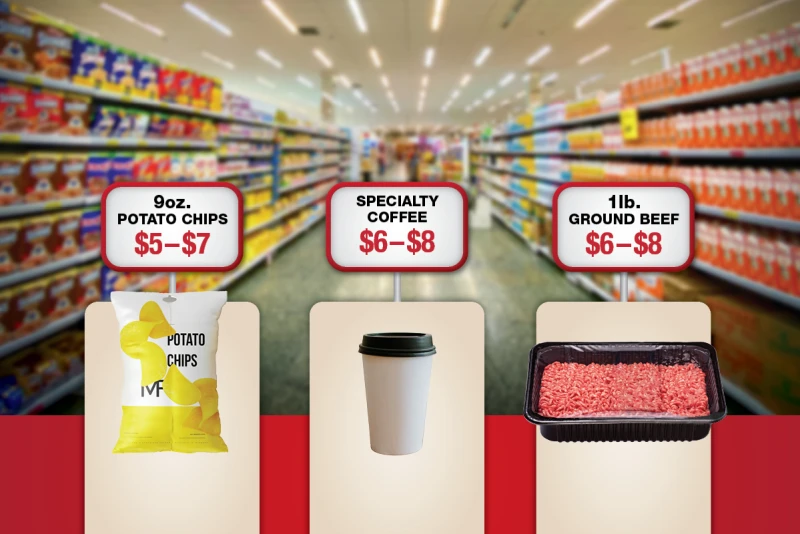
Imagine walking up to the grocery store checkout counter and gladly paying $9/lb. for a bag of Doritos, or $15/lb. for a handful of chocolate candy bars. Now, imagine walking into the same grocery store, looking at a pound of fresh, nutrient-packed ground beef priced at $6.50/lb., and thinking, “This is outrageously expensive.”
This is the psychological paradox of the grocery store today. Because consumers purchase snacks by the bag, treats by the box and fancy lattes by the cup, they rarely calculate what those items actually cost by weight. When put on the same scale, however, the math is eye-opening. Ground beef — one of the most complete, vitamin-rich proteins available — consistently costs a fraction of the price of the highly processed junk food and single-use luxuries we buy without a second thought.
But as consumers complain and policymakers scramble for quick fixes, beef producers and industry stakeholders are warning of a deeper economic reality — beef prices aren’t too high; they are finally reflecting the true cost of production during a historic domestic supply shortage. Suppressing these prices artificially today could permanently damage our domestic food security tomorrow.
Junk Food Math: Beef vs. Everyday Luxuries
To understand just how cheap ground beef is relative to other common purchases, consumers only need to apply the equalizer — price per pound.
When a consumer buys a standard 9-ounce bag of potato chips for $5, they rarely register that they are paying nearly $9/lb. for thin slices of potato fried in seed oil. When they buy a high-end specialty coffee for $6.50, they are paying an astronomical rate per pound for what is essentially water, milk and a shot of espresso bean extract.

Yet, when 80/20 or 90/10 ground beef crosses the $6/lb. to $7/lb. threshold, it triggers national headlines.
The difference is cognitive. Ground beef is a “center-of-the-plate” raw ingredient. Consumers buy it in heavy, single-pound packages, making the total price highly visible all at once. But when compared to processed, packaged goods, beef remains a remarkable financial bargain.
USDA Secretary Brooke Rollins at the Nebraska State Fair on Aug. 31 argued that, despite consumer sticker shock, today’s beef prices are not out of line historically and still deliver strong value compared to everyday purchases.
She stresses that when you account for wages, beef is not dramatically more burdensome than it was 50 years ago: “$6 for a pound of ground beef, an average American works the same amount of time today for that $6 pound of ground beef than they did in 1975.”
Rollins compares beef with common, accepted “small luxuries”: “My Starbucks costs $7.50. The Chick-fil-A I buy my 16-year-old costs $12.35. A pound of ground beef at $6 feeds a family of four and is one of the most nutritious foods you can have.”
Market Manipulation or Macroeconomics? The Antitrust Fight
Rising beef prices and government scrutiny of the meat industry have kept the sector in national headlines. President Donald Trump and Secretary Rollins have both targeted the dominance of the “Big Four” meatpackers — JBS, Cargill, Tyson Foods and National Beef— noting they control up to 85% of the nation’s fed beef market. However, independent industry data compiled by Sterling Marketing Inc. shows their actual harvest share has steadily dropped to 75.8% today, down from 81.7% in 2015.

Even so, the federal government is turning up the heat. Following the Department of Justice’s (DOJ) May 2026 announcement of a criminal antitrust investigation into the big packers, the DOJ Antitrust Division recently expanded its probe to the retail level.
In letters dated July 16, 2026 — which recently came to light — Associate Attorney General Stanley E. Woodward Jr. targeted eight of the nation’s largest grocery chains — Walmart, Costco, Amazon, Kroger, Publix, Aldi, Albertsons and Ahold Delhaize. The DOJ demanded detailed data on retail pricing margins and procurement practices to determine whether these corporate gatekeepers are artificially inflating shelf prices while keeping wholesale payout rates to domestic ranchers low.
Highlighting the priority of the probe, the DOJ shared on social media: “Beef prices are a critical concern to Americans, and a priority for this Justice Department.”
Not everyone in the cattle industry agrees corporate concentration equates to anticompetitive behavior. John Nalivka, president of Sterling Marketing, says consolidation largely reflects economics and efficiency within the packing sector. He notes Sterling Marketing’s profit tracker shows beef packers have actually been in the red losing $100 to $150 per head for more than a year.
He argues producers underestimate how critical the big plants are to the supply chain. “The only thing worse than having too few packers,” Nalivka stresses, “is having no packers.”
The Danger of Government “Quick Fixes”
Faced with consumer frustration, policymakers are searching for rapid interventions to lower prices. Trump signed Proclamation 11059 on Wednesday, Aug. 26, aiming to lower ground beef prices by dramatically boosting imports from other countries. While the White House frames the move as quick relief for struggling families at the grocery store, it has ignited a fierce backlash from the administration’s typical allies: American ranchers. Since the announcement beef producers and industry groups have come out against Trump’s plan. Many shared posts on social media detailing their frustration.
Trump’s proclamation will remove tariffs from 300,000 metric tons of imported lean beef trimmings for 90 days. He says the countries supplying the beef would sell it at 25% below current market prices, as he first announced on Truth Social Friday Aug. 21.
A primary focal point is the temporary tariff-free import of 300,000 metric tons of foreign ground beef aimed at driving down retail prices. But agricultural law and economics experts warn that these policies carry dangerous, unintended consequences. Roger McEowen, Washburn University School of Law professor of agricultural law and taxation, in a recent blog argues trying to force prices down artificially could cripple domestic producers.
“The central policy question is not simply how to make beef cheaper,” McEowen notes. “It is how to increase the quantity of beef available to American consumers while preserving the economic incentive for American ranchers to rebuild the cattle herd.”
McEowen warns that price controls or floodgates of subsidized foreign imports risk undermining domestic markets. If the government artificially suppresses beef prices just as ranchers are trying to recover, domestic producers will continue to exit the business. This would trigger a much more severe, permanent domestic beef shortage.
He emphasizes lowering regulatory hurdles, improving credit availability for herd expansion, and enacting favorable tax policies are the only sustainable ways to naturally increase supply and stabilize prices over the long haul.
Instead of using short-term policy levers to lower prices at the expense of American ranchers, it is time to focus on long-term supply solutions.
Ultimately, paying the true cost of beef isn’t just about getting a bargain at the register — it is an investment in keeping American ranchers on the land so they can feed us tomorrow. The next time you walk down the grocery aisle, take a closer look at the unit pricing. That pound of ground beef isn’t a luxury item you can’t afford — compared to almost everything else in your cart, it remains the best deal in the store.
Your Next Reads:
- Rebuilding the Herd or Agitating the Market? Analysts Urge Caution on USDA’s “Ranchers First” Rollout
- “Stay Out of Our Lane:" Cattle Producers Say Trump’s Beef Import Plan Feels Like Betrayal
- President Trump Floats Meat Processing Deregulation: Is It Realistic?
- JBS Ties to Trump’s Beef Import Decision Draw Sharper Scrutiny After Oval Office Meeting Revealed




