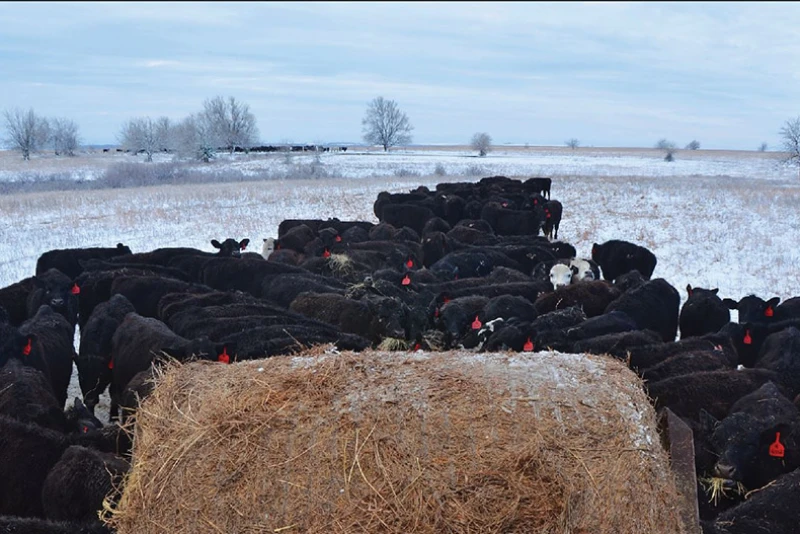
Winter cow nutrition usually revolves around two big-ticket items: crude protein and total digestible nutrients (TDN). Yet across the High Plains and Western Corn Belt, an invisible deficiency quietly undermines calf crops before cows ever drop their calves.
“Although I usually emphasize energy and protein intake when planning winter cow nutrition, ensuring adequate vitamin A intake is also important. Vitamin A is the vitamin most likely to be deficient in cattle diets and is the only vitamin with a well-defined requirement,” emphasizes Dr. Bob Larson, DVM, PhD reproductive physiologist and epidemiologist with the Kansas State University Beef Cattle Institute.
When winter diets run short, cow herds suffer silent losses: weak calves that fail to nurse, chronic scours, respiratory outbreaks, poor rebreeding performance and unexplained stillbirths. Recent research underscores preventing these setbacks requires producers to rethink standard feeding recommendations — especially during late gestation.
The Biology: Defending the Calf’s First Line of Defense
Unlike water-soluble vitamins that rumen microbes synthesize internally, cattle require dietary precursors to meet their vitamin A needs. Green forage supplies beta-carotene, which cattle convert into retinol — active vitamin A — in the intestinal wall.
Mary Drewnoski, University of Nebraska–Lincoln (UNL) beef systems specialist and nutritionist, explains vitamin A operates far beyond simple vision maintenance.
“The thing that you need to understand about vitamin A is that it actually impacts how cells develop and function,” she says. “In a particular retinoic acid, which is one of the active forms regulates gene transcription. What that means, though, is it’s especially important for tissues that are undergoing rapid growth and development. So, if you think about things like epithelium, epithelium like your skin, your digestive tract, your respiratory tract, and then also you can think about your uterine environment.”
Drewnoski points out the youngest animal in the herd are at the greatest risk. “In terms of in the cow-calf system, that newborn calf is probably the one that I hone in on the most because they are the most susceptible in the cow-calf system to vitamin A deficiency.”
When calves lack adequate vitamin A, their gut and airway linings degrade. Pathogens penetrate the gut mucosal barrier with ease, transforming manageable bacterial exposure into life-threatening neonatal scours and summer pneumonia.
The Colostrum Paradox: Why Adequate Cows Mother Deficient Calves
For decades, the standard rule of thumb suggested if cows grazed lush summer pastures, they stored two to four months’ worth of vitamin A in their livers — plenty of reserve to skate through winter.
New research from UNL shatters that assumption.
In grazing trials, UNL researchers monitored running-age cows coming off lush native grass with exceptionally high liver reserves — nearly 800 mcg/g, well above the 300 mcg/g threshold considered adequate. The researchers limit-fed the cows through gestation on winter diets containing low supplemental vitamin A. At 32 days post-calving, the cows still retained liver concentrations near 500 mcg/g — solidly adequate.
Yet their calves told an alarming story: the calves averaged liver concentrations of only 51 mcg/g — barely half the 100 mcg/g baseline requirement. Only four calves out of the entire group reached adequate status.

Why Did Adequate Cows Mother Deficient Calves? First, placental transfer of vitamin A is almost non-existent in cattle. “Placental transfer is pretty minimal. It is all about the colostrum. It’s not about the milk,” Drewnoski notes.
Colostrum carries six to 14 times more vitamin A than whole milk, making the first nursing session critical.
Second, maternal physiology dictates where colostrum gets its vitamins. Tracer trials prove the cow’s liver supplies only 40% to 50% of the vitamin A found in colostrum; the remaining 50% to 60% comes directly from active dietary intake during the weeks preceding calving. Because dietary vitamin A travels via the lymphatic system, it bypasses the liver on its first pass, giving the mammary gland direct priority.
“So what you need to be feeding that cow to meet the calf needs is very different from what you need to be feeding that cow to get her to breed and actually even carry the calf to birth,” Drewnoski says.
If a cow eats a diet devoid of active vitamin A while developing colostrum, her colostrum comes up dangerously short — no matter how green her summer pasture was.
Forages: The Great Winter Disappearing Act
During spring and summer, lush pastures provide three to five times the cow’s daily vitamin A requirement, allowing her to saturate liver reserves. But as soon as frost hits, the supply vanishes.
“Brown grass, whether it’s in the pasture or you build it up and you’re feeding hay, corn residue, straw, all those things. Basically, you can assume pretty much nil for vitamin A or beta carotene, and grains and byproducts also do not have very much vitamin A,” Drewnoski cautions.
Furthermore, stored hay degrades constantly in storage. Larson notes harvest timing and weather dictate how much carotene survives in a bale.
“Large losses of carotene take place in the curing and storage of roughages,” he explains. “Hays that are cut in the bloom stage or earlier and cured without exposure to rain or excessive sun retain most of their original carotene content, while hay cut in the seed stage and exposed to rain or to extended periods of sunshine lose most of the carotene content.”
Even well-put-up hay deteriorates over time. “Both carotene and vitamin A are destroyed by oxidation, which can occur during feed storage,” Larson explains.
K-State beef systems specialist Emma Briggs adds producers cannot rely on year-old forage. “Even hay from good green forage may not maintain adequate vitamin A levels over time, as carotene is unstable and can degrade, even when stored properly. This degradation can result in a loss of one-third to one-half of beta-carotene levels each year.”
To make matters worse, visual inspection can mislead even experienced eyes. Testing conducted at UNL shows two hay samples displaying nearly identical green color tested at 163 IU/lb versus 38 IU/lb of active vitamin A equivalent — a fourfold difference that the human eye cannot discern.
Recognizing Clinical and Subclinical Red Flags
When herds experience prolonged deficits, symptoms spread across age classes.
“Vitamin A deficiency in cattle can manifest through a range of clinical signs, including reduced feed intake, growth issues, night blindness, and reproductive failures like low conception rates and stillborn calves,” Briggs says. “Calves born to vitamin A-deficient cows can exhibit signs of a depressed immune system, making them more vulnerable to disease.”
In mature animals, classic clinical signs include:
- Night blindness: Cattle bump into gates, fences and feed bunks at dusk or dawn.
- Watery eyes and nasal discharge: Irritation in the tear ducts caused by thickened epithelial tissues.
- Poor hoof and coat condition: Rough, dry, bleached coats and dry, brittle hooves that display vertical cracks.
- Infertility and pregnancy loss: Irregular heats, silent estrus, retained placentas, delayed conception and mid- to late-term abortions.
Severe winter weather accelerates these issues. Cold stress triggers higher metabolic demands, causing cows to burn through liver reserves faster and tipping marginal herds into overt deficiency.
Management Strategies: Target Late Gestation
Correcting vitamin A deficits does not require expensive overhauls. As Briggs notes, “Luckily, adding vitamin A to cattle diets is both simple and budget-friendly.”
- Focus on the 60-Day Pre-Calving Window: Cows begin synthesizing colostrum roughly four to six weeks prior to calving. Ensure cattle receive supplemental vitamin A during the entire final trimester rather than waiting until lactation begins.
- Elevate Mineral Concentrations: National Research Council (NRC) baseline guidelines suggest roughly 30,000 to 45,000 IU/head/day for gestating cows. However, UNL data shows that feeding three to five times NRC recommendations (approximately 70 to 120 IU per pound of body weight, or roughly 75,000 to 125,000 IU/head/day) ensures calves achieve optimal liver reserves. For a free-choice mineral with a 4-ounce intake target, formulate with 350,000 to 400,000 IU of stabilized vitamin A per pound during winter months.
- Protect Mineral Freshness: Store mineral bags out of direct sunlight and moisture. Heat, trace minerals and humidity oxidize synthetic vitamin A rapidly. Buy fresh mineral inventory each winter and avoid carrying over open bags through summer heat.
- Evaluate Injections Carefully: Intramuscular vitamin A injections elevate immediate blood levels and supply rapid support to severely depleted cows. However, single injections fail to sustain blood concentrations across the multi-week colostrogenesis window. Use injections as emergency therapy, not as a replacement for daily dietary supplementation.
The Bottom Line: Cheap Insurance for a Pricey Calf Crop
Cutting corners on free-choice mineral might save a few dollars at the feed store, but trimming vitamin A carries severe financial risk.
Drewnoski calculates the exact economics of elevating vitamin A levels from a standard maintenance mix to an intensive late-gestation fortification: “What’s that going to cost you? Last time I priced out vitamin A, which I just bought some. This for 120 days is going to cost me 62 cents per cow. What’s 62 cents per cow if I can ensure that I don’t have to treat my calves? If I keep one calf alive, holy smokes! It’s pretty easy to kind of say, ‘Yeah, I’m willing to spend that little bit of extra money because this number right here scares people.’ I’m adding another $62 a ton in my cost, and everybody wants to cheapen up their mineral. I would say this is probably not the place to cheapen it up in that late gestation period. Make sure you’re providing enough.”
With feeder calf values sitting near historical highs, losing a single calf to weak-calf syndrome or scouring pays for a truckload of mineral. Review your winter feeding protocols today, check the vitamin tag on your mineral bags, and ensure your pregnant cows receive the nutrition required to deliver thriving calves come spring.