
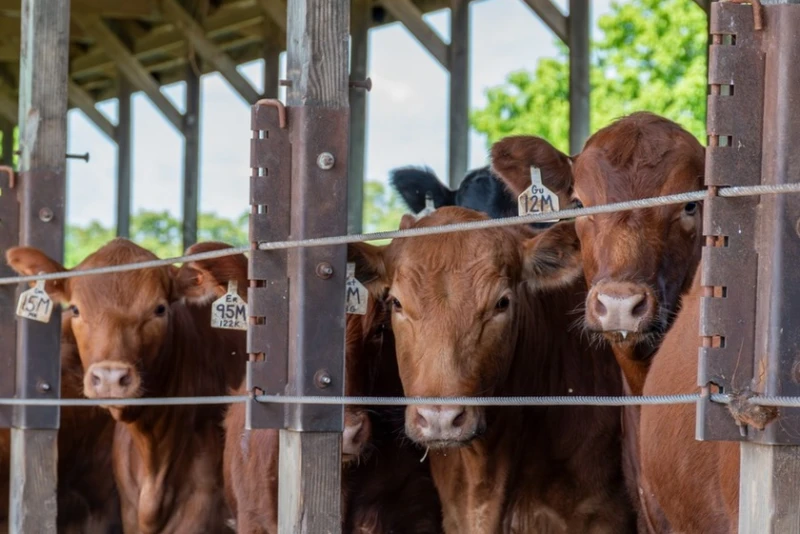
Across feedyards and stocker operations, bovine respiratory disease (BRD) outcomes are influenced by far more than a single moment in time. Strong stockmanship, like low-stress handling, facility flow and consistent daily management, alongside disease prevention, directly influence BRD pressure.
Low-stress handling matters
Transition periods naturally challenge cattle. Transportation, commingling, ration changes and unfamiliar facilities can all affect animal health, as they adapt to a new environment.
“When we get cattle in a more confined situation, there are always stressors involved,” said Kip Lukasiewicz, DVM, with Production Animal Consultation. “What we don’t want is that initial stress turning into chronic stress.”
Jody Wade, DVM, Boehringer Ingelheim, further explains how stress influences BRD management.
“The way we handle cattle can make a huge difference in how they respond to vaccines and antibiotics,” he said. “Reducing stress through good animal handling and stockmanship is so important for cutting down respiratory disease.”
Strong BRD management often comes down to consistent protocols and day-to-day cattle management.
“Operations that manage respiratory disease well are vigilant about doing the same things every day,” stressed Dr. Wade.
Dr. Lukasiewicz agrees, but notes that labor turnover continues to challenge many operations.
“The biggest handling challenge we have is experience in our labor,” said Dr. Lukasiewicz. “It’s not just about training new employees. It’s about building strong trainers and leaders within the team. Consistency only happens when training is continuous.”
He also emphasizes the importance of understanding how cattle naturally move as prey animals.
“If we’re having to force animals into facilities, the question comes down to why,” shared Dr. Lukasiewicz. “Wherever there’s a force, it’s not only uncomfortable for the animals, but we’re also making a very unsafe environment for the people who are handling the animals in those situations.”
When evaluating facilities, Dr. Lukasiewicz focuses on the voluntary cattle flow. Because cattle rely heavily on eyesight, improving visibility in an alleyway or working area can sometimes help solve movement challenges in the long term.
“Cattle have a remarkable ability to adapt to new environments, but it’s our responsibility to support them through transition,” he continued. “Good animal handling and thoughtful facility design can help reduce the risk of chronic stress, which directly impacts disease risk.”
Prevention remains a cornerstone of BRD control
While stockmanship helps reduce stress, effective vaccination programs remain essential to BRD prevention. Because cattle sources, management styles and handling practices vary from ranch to ranch, Dr. Wade shares that a vaccination program should be tailored to the individual operation.
“Working closely with a veterinarian to create clear, consistent protocols can help support cattle health, especially during the early stages of receiving,” said Dr. Wade. “Additionally, knowing exactly what vaccines new cattle have received and the vaccination timing plays a major role in how cattle should be managed and processed after purchase.”
Asking the right questions about vaccination history and processing decisions up front can better prepare cattle for the next phase of production.
“Buyers will specifically ask about that protocol when evaluating our calves,” pointed out Dr. Wade. “On our operation, we use PYRAMID® 5 + PRESPONSE® SQ.”
Vaccines like PYRAMID are designed to help build early protection, even in the face of maternal immunity, thanks to their unique adjuvant, MetaStim®. Peer-reviewed studies and fieldwork have shown this adjuvant’s dual-phase technology can help stimulate a balanced, robust immune response in calves as young as 30 days of age.1
Getting the most out of your BRD prevention plan goes beyond records and product selection. Beef Quality Assurance (BQA) principles reinforce day-to-day practices, supporting cattle health and long-term vaccine effectiveness.
“It’s important that we’re administering and handling vaccines correctly,” said Dr. Wade. “When we do, we’re setting those cattle up for success. Cattle are just too expensive today to let BRD get a firm hold. Being BQA certified is a good way to make sure we’re doing the small things right every day.”
Even in well-managed systems, BRD will still occur. When it does, timely treatment remains critical.
“The sooner we identify and treat sick cattle, the better their response to treatment can be,” concluded Dr. Wade. “To support a strong recovery, I recommend a broad-spectrum, fast-acting antibiotic, like ZACTRAN® (gamithromycin).”
Whether preventing disease through vaccination or responding quickly when cattle become sick, successful BRD management comes back to consistency. Strong stockmanship, thoughtful facility design and veterinarian-guided health protocols all work together to help reduce disease pressure and support long-term cattle performance.
ZACTRAN IMPORTANT SAFETY INFORMATION: Do not treat cattle within 35 days of slaughter. Because a discard time in milk has not been established, do not use in female dairy cattle 20 months of age or older, or in calves to be processed for veal. Subcutaneous injection may cause a transient local tissue reaction in some cattle that may result in trim loss of edible tissues at slaughter.
Reference:
1 Perkins-Oines S, Dias N, Krafsur G, et al. The effect of neonatal vaccination for bovine respiratory disease in the face of a dual challenge with bovine viral diarrhea virus and Mannheimia haemolytica. Vaccine 2023;41(19):3080–3091.
PYRAMID® and PRESPONSE® are registered trademarks of Boehringer Ingelheim Animal Health USA Inc. ZACTRAN® is a registered trademark of Boehringer Ingelheim Animal Health France, used under license. All other trademarks are the property of their respective owner. ©2026 Boehringer Ingelheim Animal Health USA Inc., Duluth, GA. All rights reserved. US-RUM-0177-2026




